
Rhinoplasty in Miami
Your nose should fit your face naturally — not look overdone.
Subtle balance. Bridge refinement. Tip definition. Correction after a previous nose surgery. Dr. Rafael Ramos offers a precise, individualized approach to rhinoplasty — centered on proportion and natural facial harmony.
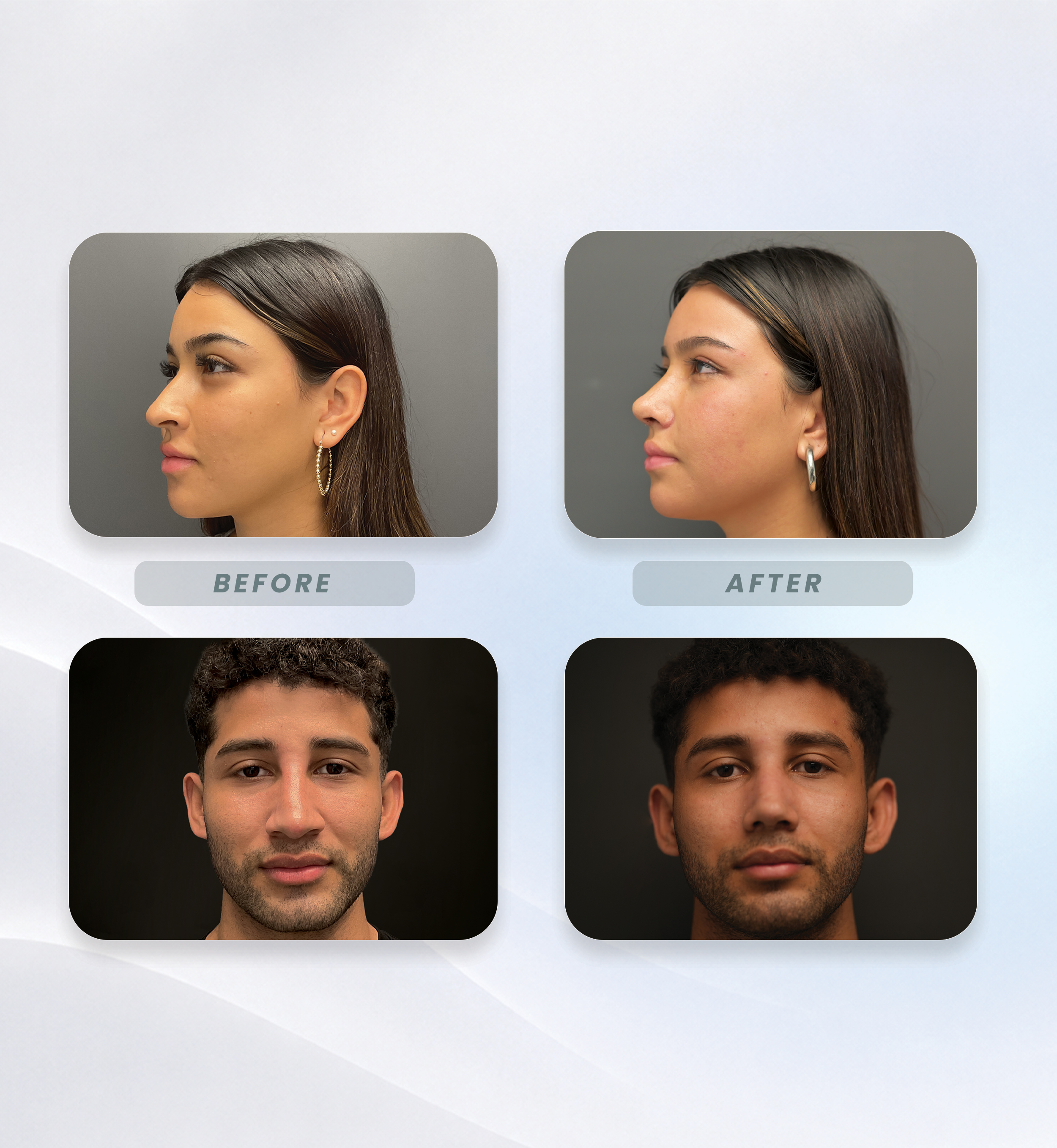
You know what bothers you about your nose. You just want it to look natural.
Whether it's a dorsal hump, a wide bridge, an undefined tip, or a result you're not happy with from a previous surgery — the concern is real and it affects how you see yourself every day. The problem with rhinoplasty is not just fixing the issue.
It's fixing it in a way that still looks like you.
Does any of this sound familiar?
- A dorsal hump that makes your profile feel unbalanced
- A bridge or tip that looks too wide, too flat, or undefined
- Asymmetry you've been aware of for years
- A previous rhinoplasty result you're not happy with
- Breathing concerns combined with aesthetic goals
A modern approach: precision rhinoplasty with preservation technique and PIEZO ultrasonic technology.
Rhinoplasty is a surgery of millimeters. Small changes in the bridge, tip, or nostrils can make a major difference in overall facial balance. For the right candidate, preservation rhinoplasty can reshape the nose while keeping more of its natural anatomy intact — rather than aggressively dismantling and rebuilding it.
What it can address:
- Dorsal hump reduction
- Bridge width and refinement
- Tip shape, projection, and definition
- Nostril size and symmetry
- Overall facial balance and proportion
- Correction after a prior rhinoplasty
PIEZO ultrasonic technology
When bridge refinement or hump reduction is needed, Dr. Ramos may use ultrasonic PIEZO technology to sculpt nasal bone with exceptional control while minimizing trauma to surrounding soft tissue. For selected patients, this can mean less bruising, less swelling, and a smoother early recovery compared with traditional osteotomy techniques.
Advanced training in both primary and revision rhinoplasty.
Whether you are considering your first rhinoplasty or need correction after a prior procedure, the surgical plan has to be built around the current structure of your nose. Dr. Ramos's background gives him the tools to approach both straightforward cases and complex reconstructions with equal precision.
|
Training |
Plastic surgery training at Cleveland Clinic |
|
Subspecialization |
Primary and revision rhinoplasty with leading experts |
|
Approach |
Preservation rhinoplasty + ultrasonic PIEZO technology |
|
Revision cases |
Complex cases with scar tissue, loss of support, structural reconstruction |
|
Grafting |
Septal, ear, rib cartilage and rib allograft when needed |
|
Philosophy |
Precision, proportion, and natural facial harmony — never one-size-fits-all |
What patients say:
"I had a previous rhinoplasty that didn't look right. Dr. Ramos understood exactly what needed to be corrected and gave me a result that finally feels natural on my face." — Patient review
Not every nose needs the same approach.
The best technique depends on what your nose needs structurally and what kind of result you want to achieve. Here's a simple way to understand the difference:
|
Preservation Rhinoplasty |
Structural / Revision Rhinoplasty |
|
Ideal for hump reduction and bridge refinement |
Needed when prior surgery has weakened the structure |
|
Preserves more natural nasal anatomy |
Requires rebuilding with cartilage grafts |
|
Often means less swelling and bruising |
More complex — swelling may take longer to resolve |
|
Not appropriate for every anatomy |
Graft material from septum, ear, rib, or allograft |
During your consultation, Dr. Ramos will evaluate your anatomy and determine which approach gives you the safest, most natural result.
What recovery looks like — week by week.
Recovery varies from patient to patient, but knowing what to expect makes it manageable.
Week 1 — Splint and rest
A nasal splint is worn for approximately one week. Bruising and sensitivity are common. Rest is the priority.
Week 1–2 — Return to light activity
Many patients return to non-physical, desk-based work after about a week. Swelling is still present but manageable.
Weeks 3–6 — Progressive improvement
Most visible bruising has resolved. Swelling continues to improve. Strenuous or contact activity is avoided for at least six weeks.
Months 3–12+ — Final results
Rhinoplasty results continue to evolve as internal swelling gradually resolves. Final refinement can take several months to a year, particularly in revision cases.
SURGICAL SAFETY
All procedures at Careaga Plastic Surgery are performed in a Joint Commission-accredited facility with MD anesthesiologists. Safety protocols are followed rigorously at every stage of care.
TRAVELING TO MIAMI FOR SURGERY
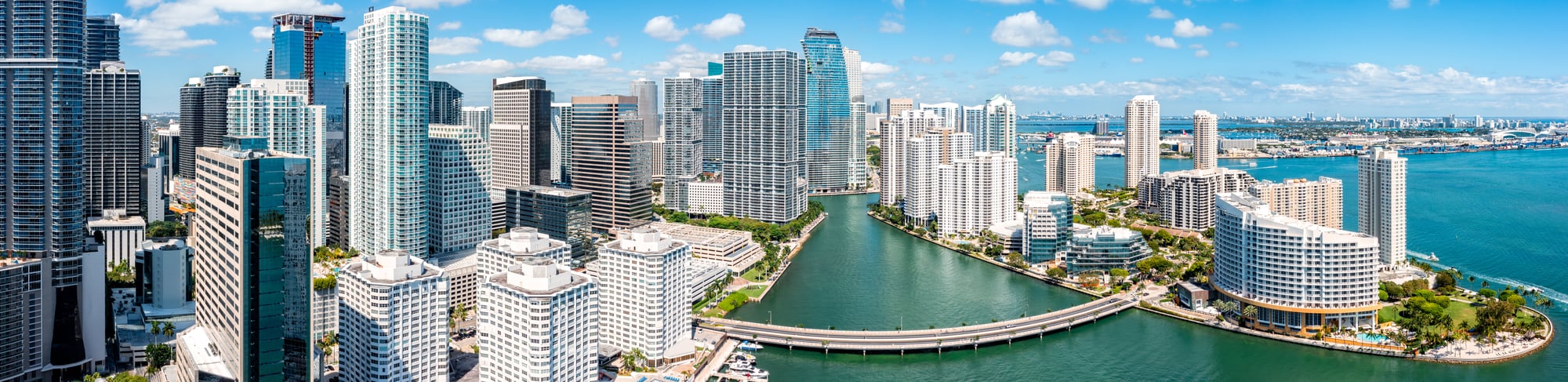
Many patients travel specifically to Miami for rhinoplasty with Dr. Ramos. Virtual consultations, structured pre-operative planning, and clear post-operative follow-up make the process accessible regardless of where you live.
- Virtual consultations available
- Detailed pre-op guidance provided in advance
- Structured post-op follow-up and recovery plan
- Coral Gables / Miami — accessible from major airports
Ready to talk about what rhinoplasty can do for your face?
Whether you are considering a first rhinoplasty or a complex revision, the right starting point is an honest, private conversation about your anatomy and your goals. No pressure. No generic answers.
Careaga Plastic Surgery | Coral Gables / Miami | In-person & virtual consultations available
FAQ
Am I a good candidate for rhinoplasty?
Good candidates have finished nasal development (usually by their late teens), are in good general health, and have specific concerns such as a dorsal hump, bridge width, tip shape, asymmetry, or overall facial balance. A detailed consultation is the only way to determine what is realistic and which technique is appropriate for your anatomy.
What is preservation rhinoplasty and how is it different?
Preservation rhinoplasty reshapes the nose while conserving more of its natural anatomical structures, rather than removing and rebuilding them. For the right candidate — typically someone seeking hump reduction and bridge refinement — it can mean a more natural result, less swelling, and a smoother recovery. It is not appropriate for every anatomy or every goal.
What is PIEZO ultrasonic technology?
PIEZO is an ultrasonic tool that allows the surgeon to sculpt nasal bone with exceptional precision while minimizing trauma to the surrounding soft tissue. In selected patients, this can reduce bruising and swelling compared to traditional bone-cutting techniques.
I had a rhinoplasty before and I'm not happy with the result. Can that be corrected?
Yes, but revision rhinoplasty is more complex than a primary procedure. Scar tissue, altered anatomy, and reduced cartilage support all add difficulty. Dr. Ramos has advanced training specifically in revision cases, including complex reconstruction using cartilage grafts from the septum, ear, or rib.
Will I need cartilage grafts?
Not always. Grafts are used when the nose needs structural support or rebuilding — most commonly in revision cases, but also in some primary rhinoplasties where the tip or bridge needs reinforcement. During your consultation, Dr. Ramos will assess your anatomy and explain whether grafting is part of the plan.
How long does recovery take?
Most patients wear a nasal splint for about one week and can return to desk work shortly after. Bruising typically resolves within two weeks. Strenuous activity is avoided for at least six weeks. Final results continue to develop as internal swelling resolves over several months — up to a year or more in some revision cases.
When will I see the final result?
The nose looks noticeably different relatively quickly, but rhinoplasty results continue to evolve as swelling subsides. Subtle refinement continues for several months, and in revision cases, it can take 12 months or more to see the full final result.
Can I combine rhinoplasty with other procedures?
Yes. Rhinoplasty is often combined with chin augmentation or other facial procedures to optimize overall facial harmony and proportion. We'll discuss whether a combined approach makes sense for your goals during your consultation.
Does rhinoplasty address breathing problems?
It can. When a deviated septum or other internal structural issue is contributing to breathing problems, functional correction can be addressed at the same time as aesthetic rhinoplasty. Not all rhinoplasty patients have functional concerns — this depends on your anatomy.
Can I have a virtual consultation?
Yes. Virtual consultations are available for patients who are traveling to Miami for surgery or who want to discuss their goals before committing to an in-person visit. We can review your concerns, discuss your anatomy based on photos, and give you a clear picture of what to expect.